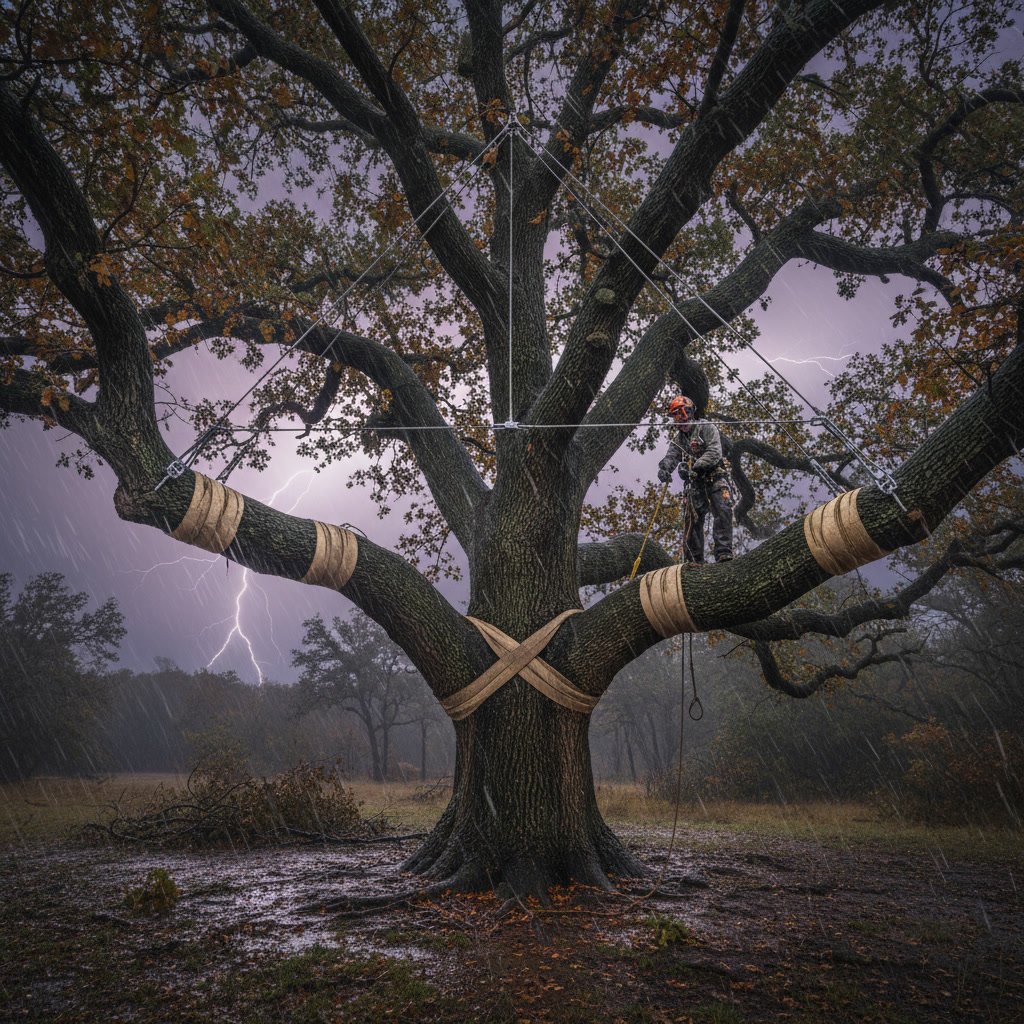
Tree cabling bracing systems provide structural support to weak or split limbs, multiple trunks, and leaning trees before severe weather causes catastrophic failure. Professional arborists install flexible steel cables and rigid braces to redistribute weight, limit movement during high winds, and preserve mature trees that would otherwise require removal. These preventive systems can extend a tree’s life by decades while protecting nearby structures and people from falling branches.
Why Mature Trees Need Structural Support
Large trees develop structural weaknesses over time that make them vulnerable to storm damage. Multiple trunks that grew from a single point create weak unions where bark becomes trapped between stems. Heavy horizontal branches extend far from the trunk without adequate support. Ice accumulation and wind loads add forces that healthy wood can handle, but compromised areas cannot.
Trees with co-dominant leaders, where two or more trunks compete for dominance, face particular risk. The included bark between these stems prevents strong attachment, creating a natural splitting point. A 60-mile-per-hour wind can generate forces exceeding several thousand pounds on large limbs, far beyond what a weak union can withstand.
The Engineering Behind Cable and Brace Systems
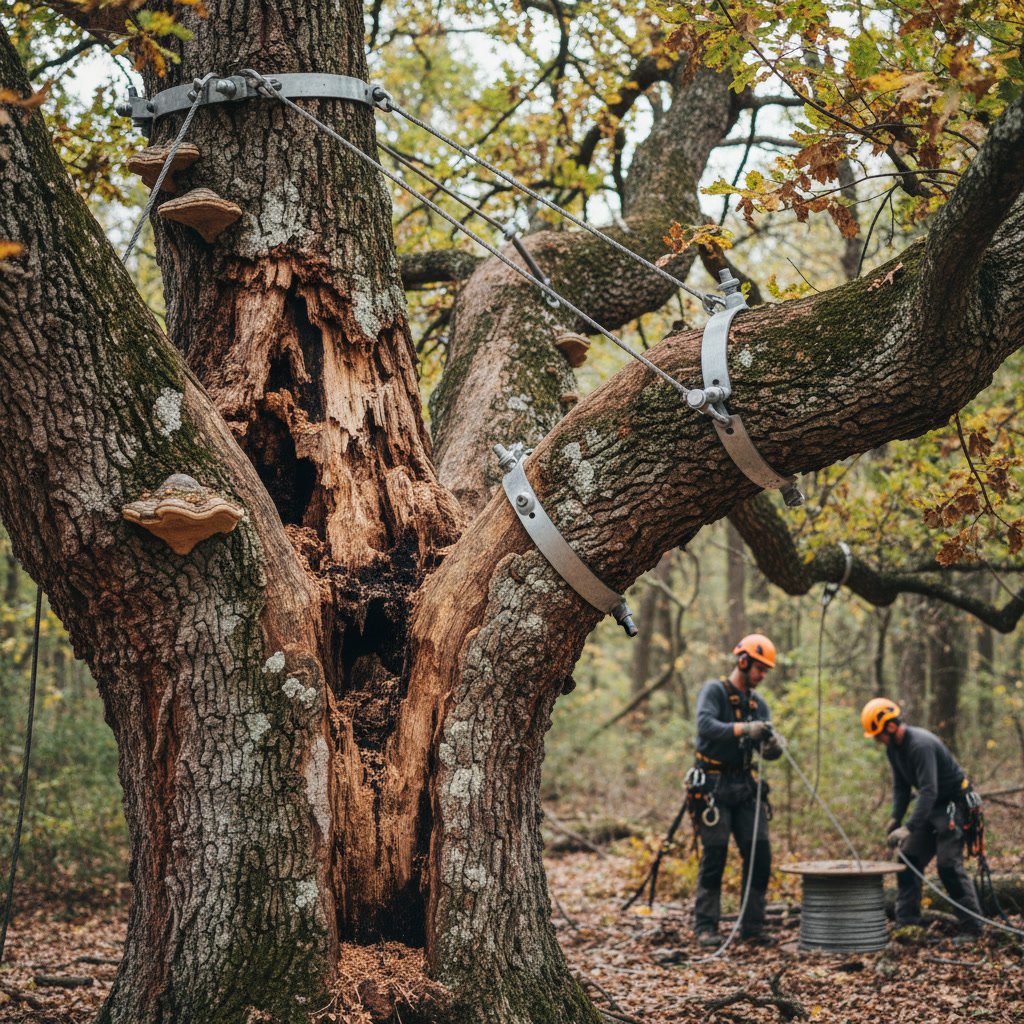
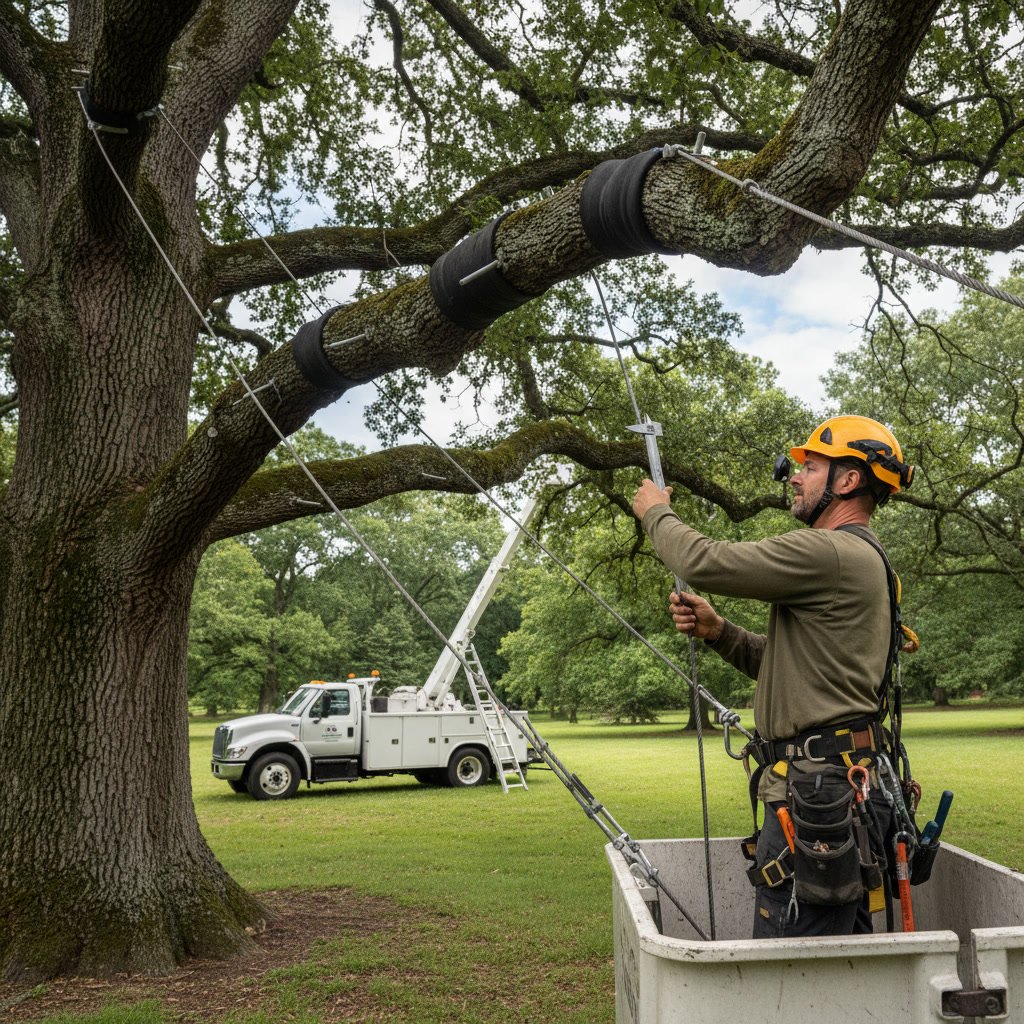
Steel cables installed high in the canopy work like suspension bridge supports, transferring load from weak points to stronger parts of the tree. Arborists drill small holes through sound wood and install threaded hardware that anchors the cable system. The cable itself remains slack under normal conditions but engages when wind or ice creates excessive movement.
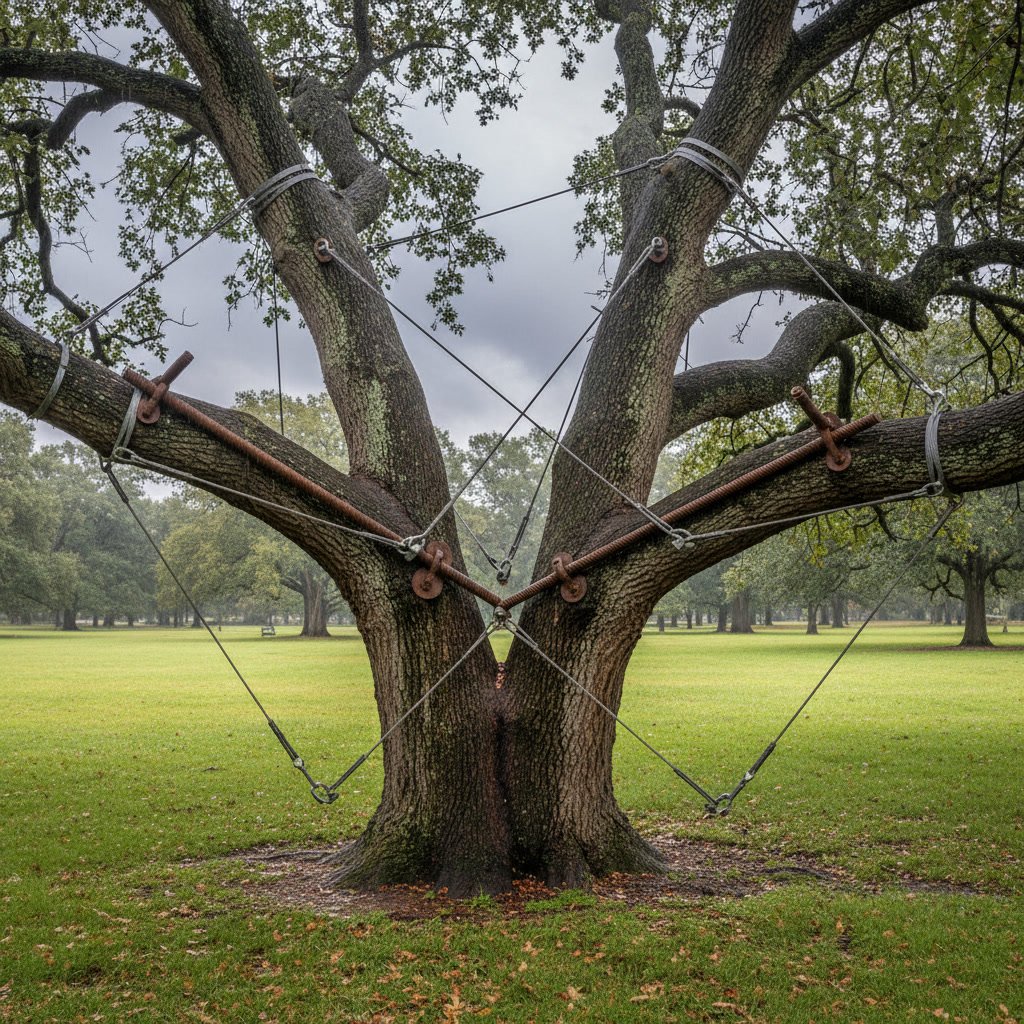
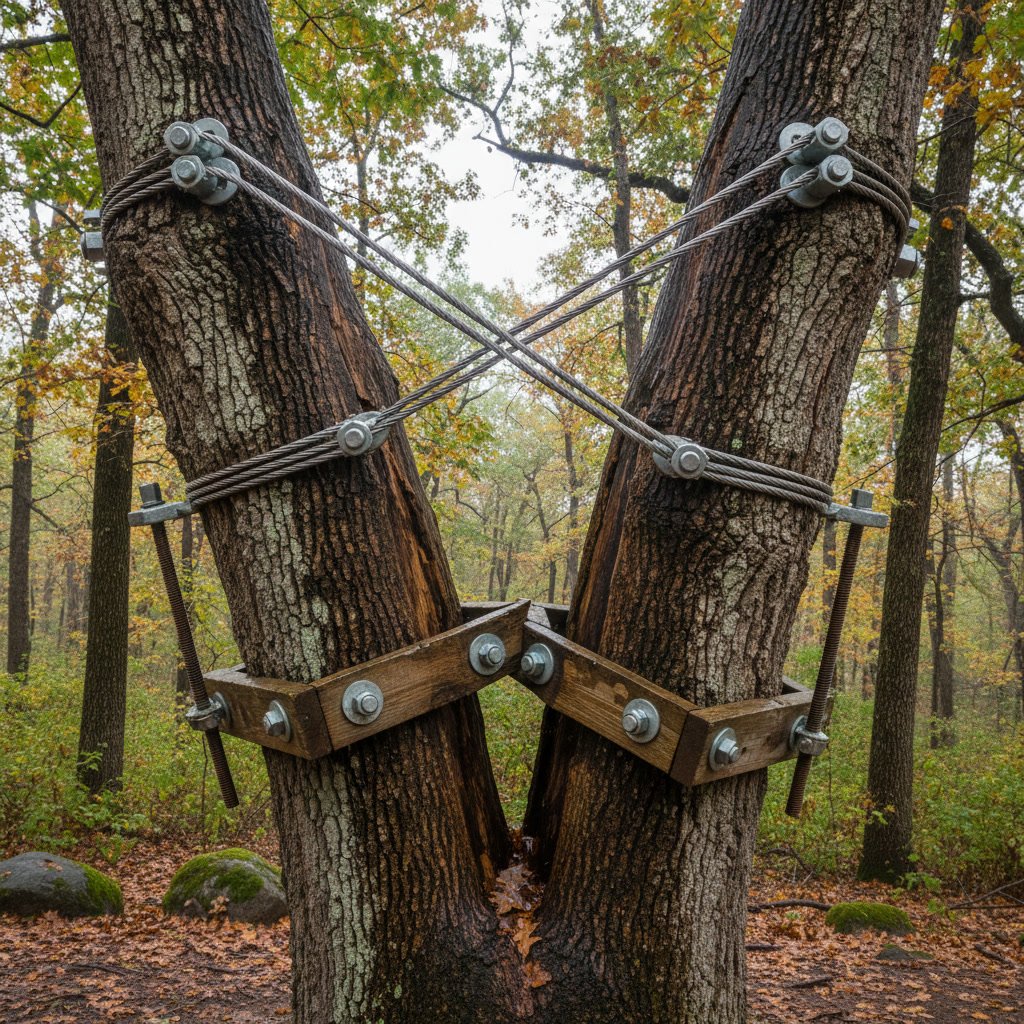
Rigid braces address different structural problems. Through-bolts with threaded rods pull split trunks or limbs back together, preventing further separation. Unlike cables that limit movement, braces restrict it entirely at the installation point. Professional installation requires understanding wood mechanics, growth patterns, and how trees compartmentalize wounds around hardware.
Common Tree Problems That Require Support Systems
Split crotches represent the most frequent structural failure. When a tree develops a V-shaped union between major limbs or trunks, the angle creates stress that concentrates at the junction point. Even healthy trees with this architecture benefit from preventive cabling before a storm forces the stems apart.
Overextended limbs that shade patios, driveways, or roofs need support when their weight exceeds safe limits. Removing these branches eliminates shade and changes the tree’s appearance, while cabling preserves the canopy while reducing failure risk. Large specimen trees in landscape settings often justify this investment to maintain aesthetic value.
Leaning trunks caused by root failure, soil erosion, or previous storm damage can be stabilized with guy cables anchored to the ground or to adjacent trees. This application differs from canopy cabling but serves the same purpose of preventing complete failure while the tree recovers or adapts to changed conditions.
Professional Installation Standards in Owego
Proper cable installation follows industry standards that specify hardware sizes, cable strength, and placement heights. Cables should be installed in the upper two-thirds of the tree, typically at a point two-thirds the distance from the weak union to the branch tips. This position provides maximum mechanical advantage while minimizing visible hardware.
The drilling process requires precision to avoid creating new failure points. Holes must be sized exactly for the hardware, drilled perpendicular to growth, and positioned to avoid existing decay or weak wood. TEK 22 Tree Service uses certified techniques that protect tree health while installing effective support systems.
Brace rods require even greater care because they penetrate completely through the trunk or limb. The threading and tension must be calibrated to pull separated wood together without crushing internal tissues. Washers distribute pressure across a larger surface area, and the entire assembly must accommodate future growth without girdling the tree.
Materials and Hardware That Stand Up to Weather
Modern cabling systems use high-strength steel cable with breaking strengths between 2,000 and 7,000 pounds, depending on tree size and load requirements. The cable resists corrosion through galvanization or specialized coatings that withstand decades of exposure to rain, ice, and temperature extremes.
Eye-bolts, thimbles, and ferrules must meet specific grade requirements to match cable strength. A system is only as strong as its weakest component, so hardware selection matters as much as installation technique. Cheap materials may appear functional but fail precisely when the tree needs support most during a severe storm.
Dynamic cable systems incorporate springs or shock absorbers that allow controlled movement while limiting extreme sway. These advanced systems suit trees that need some flexibility to develop reaction wood, which naturally strengthens the union over time. Static cables work better for trees with severe splitting or decay where any movement increases failure risk.
How Support Systems Reduce Storm Damage
During high winds, unsupported trees flex and sway in ways that concentrate stress at weak points. Cables redistribute these forces across multiple attachment points, preventing any single area from bearing excessive load. The result is reduced branch movement, lower stress concentration, and significantly decreased probability of catastrophic failure.
Ice storms create different challenges. A one-inch ice coating can add 500 pounds or more to a large branch, transforming weight distribution and pulling limbs downward. Properly tensioned cables support this additional load by transferring weight to stronger scaffold branches or the main trunk, preventing the slow splitting that occurs as ice accumulates.
Lightning strikes often split trees vertically along the grain. While cables cannot prevent lightning damage, they can hold split sections together long enough for emergency response and evaluation. Many trees that would otherwise require immediate removal can be saved when existing cable systems prevent complete separation.
When to Install Cables Before Problems Develop
The ideal time for installation is years before any visible splitting or weakness appears. Young trees with architectural flaws benefit from early intervention that guides growth and prevents problems from developing. Proactive cabling costs less than emergency tree work after storm damage and preserves trees that cannot be replaced.
Seasonal timing affects installation success. Late winter or early spring allows wounds to compartmentalize quickly as growth resumes. Avoid installation during active growth in late spring when cambium tissue is most vulnerable to damage. Fall installation works well in most climates but leaves less time for initial healing before winter stress.
Trees showing early signs of splitting, such as vertical cracks in bark at crotch unions or slight separation between co-dominant stems, need immediate assessment. These warnings indicate that structural failure has begun, and cabling may be the difference between saving the tree and scheduling removal.
Maintenance and Inspection Requirements
Cable systems require annual inspections to verify that hardware remains tight, cables maintain proper tension, and tree growth has not compromised the installation. As trees grow, they add wood around bolts and cables, which is normal and expected. Problems arise when growth creates pressure points or when cables become embedded so deeply they restrict cambium flow.
Adjustments may be needed every few years as the tree matures. Cable tension changes as branches grow and weight distribution shifts. Hardware may need replacement if corrosion develops or if increased tree size requires stronger materials. These routine maintenance tasks cost far less than repairing storm damage or replacing a failed tree.
Professional inspection catches problems before they become emergencies. Arborists check for cable wear, hardware loosening, and new cracks or decay that might affect system performance. They also evaluate whether the original installation still addresses current structural needs or if additional support points would improve safety.
Combining Cabling with Other Tree Care Practices
Support systems work best when integrated with comprehensive tree care. Pruning removes dead wood and reduces wind resistance, decreasing loads on cabled areas. Weight reduction pruning on specific limbs can eliminate the need for cables in some situations or reduce the strength requirements for necessary systems.
Disease and pest management protect the wood quality that cables depend on. Cables cannot save trees with extensive decay or structural damage from diseases that compromise strength. Healthy wood compartmentalizes around hardware and maintains the integrity needed for long-term support system success.
Root care matters as much as canopy support. Trees with compromised root systems cannot anchor the forces that cables redistribute. Soil improvement, root collar excavation, and proper watering ensure that the foundation remains strong enough to support the above-ground structure, with or without supplemental cabling.
Cost Factors Versus Tree Replacement Value
Mature trees add substantial property value through shade, aesthetics, and environmental benefits. A large oak or maple can increase home values by thousands of dollars while providing cooling that reduces energy costs by 20 to 30 percent during summer months. Replacing a mature tree with nursery stock requires decades to achieve similar benefits.
Cable and brace installation typically costs a fraction of tree removal and replacement expenses. The investment preserves existing value while preventing property damage from falling limbs. Trees near structures, power lines, or high-traffic areas justify support systems based purely on liability reduction and safety improvements.
Insurance considerations often favor preventive measures. Some policies cover tree work that prevents foreseeable damage, while others exclude removal costs for trees that fail due to lack of maintenance. Documentation of professional assessments and installed support systems demonstrates responsible property management.
Protecting Your Property Investment Through Professional Care
Structural support systems represent one of the most effective tools for preserving valuable trees that face storm damage risk. Cables and braces extend tree life, protect property, and maintain landscape aesthetics when properly designed and installed by experienced arborists. Annual inspections and maintenance ensure these systems continue performing as trees grow and conditions change.
The best outcomes result from early intervention before structural problems become severe. Trees showing weak unions, heavy limbs, or previous damage benefit most from professional evaluation and preventive installation. Combined with regular pruning and health care, support systems keep mature trees safe and beautiful through decades of storms and changing weather patterns.
TEK 22 Tree Service provides expert assessment and installation of structural support systems for properties throughout Binghamton and surrounding areas. If your property has mature trees with weak crotches, split trunks, or heavy limbs that could fail during the next storm, professional evaluation can determine whether cabling or bracing offers a solution. Contact our team at +16072375153 to schedule an assessment and protect your valuable trees before severe weather arrives.