Emerald ash borer damage begins inside the tree long before obvious symptoms appear on the outside. The beetle larvae feed on the inner bark and disrupt water and nutrient flow, weakening the tree over one to four years. Early detection is critical because once an ash tree shows crown dieback and loses more than 50 percent of its canopy, treatment is rarely successful.
Why Ash Trees in New York Face Higher Risk
New York State harbors millions of ash trees, and the emerald ash borer has been present in the region since the mid-2000s. The beetle spreads through natural flight, human transport of firewood, and nursery stock movement. Unlike other pests that target stressed or weakened trees, the emerald ash borer attacks healthy ash trees with equal aggression. This makes every ash on your property vulnerable, regardless of its current condition or care history.
The beetle prefers green, white, black, and blue ash species. Once established in an area, infestation rates climb rapidly. Trees in urban and suburban settings often face simultaneous attacks from multiple beetles, accelerating decline. Without intervention, most infested ash trees die within two to four years of the initial attack.
The Hidden Damage That Starts Beneath the Bark
Adult beetles lay eggs in bark crevices during late spring and early summer. After hatching, the larvae bore into the tree and create serpentine galleries as they feed on the phloem and cambium layers. These tunnels disrupt the vascular system that moves water upward and sugars downward. The tree essentially starves and dehydrates from the inside out.
Because this damage occurs beneath the bark, property owners often miss the infestation until the tree is severely compromised. By the time external symptoms become obvious, the tree may have already sustained irreversible harm. Understanding the progression of internal damage helps you watch for the subtle early signs that appear before the crisis stage.
Canopy Thinning and Dieback Patterns in Owego
One of the first visible symptoms is thinning in the upper canopy. Ash trees under attack produce fewer leaves, and the leaves that do emerge are smaller and paler than normal. Dieback typically begins at the top of the tree and progresses downward as the infestation spreads. You may notice individual branches dying back while others remain green.
This pattern differs from drought stress or root disease, which usually affects the entire canopy more uniformly. If your ash tree shows isolated branch death concentrated in the crown, insect management should be your first consideration. Local conditions in the area mean that mid to late summer is the best time to assess canopy health, after the spring flush has settled.
Bark Splits and D-Shaped Exit Holes
As larvae mature, they create exit holes to emerge as adult beetles. These holes are distinctively D-shaped, roughly one-eighth inch across, and appear in the bark from late spring through early fall. The D-shape is a definitive marker, as most other wood-boring insects leave round holes.
You may also see vertical bark splits, especially on the trunk and larger branches. These splits occur because the tree produces callus tissue in response to larval feeding, and the new growth pushes outward against the bark. If you peel back loose bark, you will find the telltale S-shaped galleries carved into the wood surface. These patterns are unmistakable evidence of emerald ash borer activity.
Increased Woodpecker Activity as an Early Indicator
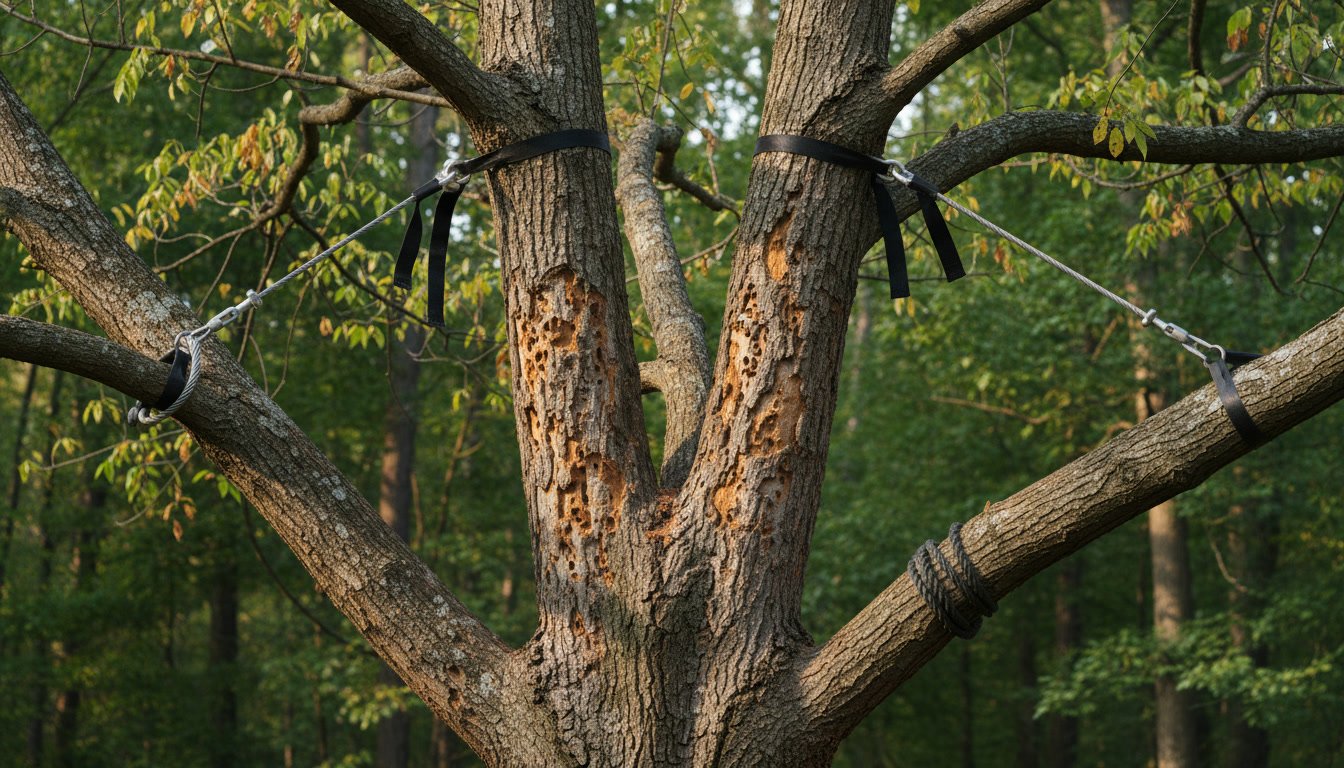
Woodpeckers feed on beetle larvae beneath the bark. When you notice fresh woodpecker damage on an ash tree, particularly near the trunk and main branches, it often signals an active infestation. The birds peck away bark to access the larvae, leaving behind irregular patches of exposed wood.
This indirect sign can appear before you spot exit holes or significant canopy thinning. Woodpecker feeding is not harmful to the tree, but it serves as a reliable early warning system. If you observe this activity on your ash trees, schedule a professional inspection immediately. Catching the infestation at this stage improves the odds that disease management and treatment protocols can save the tree.
Epicormic Shoots and Stress Responses
Infested ash trees often produce epicormic shoots, which are small sprouts that grow from the trunk or at the base of the tree. These shoots represent the tree’s desperate attempt to compensate for lost canopy and maintain photosynthesis. While epicormic growth can occur in response to other stresses, its appearance on an ash tree warrants immediate investigation for borers.
The shoots typically emerge below the area of active infestation, where some vascular function remains intact. If you see multiple water sprouts clustering along the trunk or near the root flare, treat it as a red flag. This symptom often coincides with declining canopy health and indicates that the tree is under severe physiological stress.
Seasonal Timing for Detection and Action
Different symptoms become visible at different times of year. Exit holes appear from mid-May through September when adult beetles emerge. Canopy thinning becomes most apparent in late June and July, when healthy ash trees display full leaf cover. Woodpecker activity peaks in late fall and winter, when birds focus on overwintering larvae.
Spring is the optimal time to assess overall tree health and decide on treatment. Systemic insecticides applied in spring or early summer protect the tree during the beetle’s active season. If you wait until late summer or fall to address an infestation, the window for effective chemical intervention narrows significantly. Annual inspections in April or May allow you to catch problems early and coordinate timely treatment.
When Treatment Is Worth Pursuing
Not every infested ash tree is a candidate for treatment. Trees with less than 30 percent canopy loss and limited trunk damage respond well to systemic insecticides and often recover vigor over two to three years. Trees with 50 percent or more canopy loss rarely recover, even with aggressive treatment.
Treatment costs must be weighed against the tree’s value, location, and condition. High-value specimen trees near structures or in prominent landscape positions justify the investment. Ash trees in poor locations, with co-dominant stems, or pre-existing decay issues may not be worth saving. An honest assessment by a certified arborist, similar to the approach used when determining if professional intervention is needed for other tree diseases, helps you make an informed decision.
Removal Considerations and Safety Concerns
Once an ash tree reaches the point where recovery is impossible, removal becomes necessary. Dead and dying ash trees turn brittle quickly, shedding branches without warning. The wood becomes punky and unstable, making removal more hazardous and expensive as time passes.
Delaying removal increases risk to people, structures, and utilities. Professional tree removal should be scheduled as soon as decline becomes irreversible. This proactive approach avoids emergency situations and keeps costs manageable. After removal, stump grinding eliminates the remaining beetle habitat and prepares the site for replanting.
Alternative Species and Replanting Strategies
Replacing lost ash trees with diverse species strengthens your landscape against future pest outbreaks. Oak, maple, elm, and linden all thrive in the local climate and offer similar canopy structure and shade benefits. Avoid planting a single species across your property, as monocultures invite catastrophic loss if a new pest or disease arrives.
Select trees suited to your soil, sun exposure, and available space. Proper site preparation and planting technique improve establishment success. Professional tree planting ensures that root balls are handled correctly, planting depth is accurate, and mulch is applied properly. Healthy, well-planted trees develop strong root systems and resist stress better than poorly installed specimens.
Protecting Your Property Before It Is Too Late
Emerald ash borer infestations progress quickly once they begin. Regular monitoring, early detection, and prompt action make the difference between saving a tree and losing it. Annual inspections during the growing season allow you to spot the subtle signs before they escalate into crisis-level damage.
If you own ash trees, schedule a professional evaluation to assess their current health and determine the best management strategy. Treatment, removal, and replanting all require expertise to execute safely and effectively. Taking action now protects your landscape investment and prevents the safety hazards that come with dead or dying trees.
TEK 22 Tree Service provides comprehensive insect and disease management for property owners throughout the region. Whether you need early intervention, tree removal, or guidance on replanting, our certified arborists deliver reliable solutions. Contact us at +16072375153 to schedule an assessment and protect your trees before damage becomes irreversible.