Lawn watering problems manifest in visible signs that most property owners miss until serious damage occurs. Overwatering creates shallow root systems, disease-prone turf, and standing water, while underwatering produces brown patches, soil cracking, and stress-weakened grass vulnerable to pests. Recognizing these symptoms early allows you to adjust irrigation schedules, improve drainage, and restore your lawn’s health before permanent damage sets in.
Why Proper Watering Matters More Than Most Homeowners Realize
The difference between a thriving lawn and a struggling one often comes down to water management. Grass needs consistent moisture at the root zone, typically four to six inches below the surface, to develop the deep root systems that sustain it through heat and drought. When watering schedules ignore soil type, grass species, and seasonal changes, roots stay shallow and weak.
Soil composition plays a critical role in how water moves and how long it stays available to roots. Clay soils hold water longer but drain slowly, creating waterlogged conditions if you irrigate too frequently. Sandy soils drain quickly, requiring more frequent watering in smaller amounts. Understanding your soil type is the first step to diagnosing watering issues.
The Hidden Costs of Getting Hydration Wrong
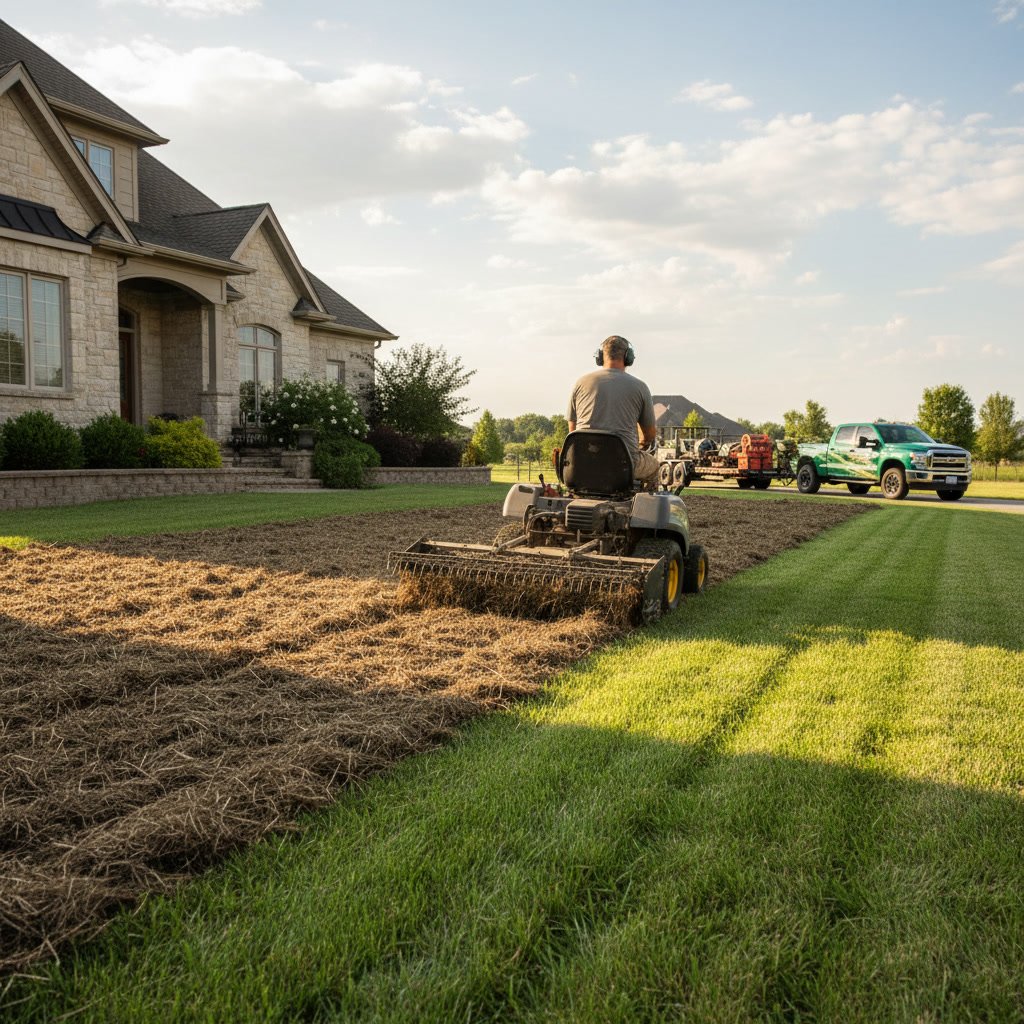
Beyond the visible brown spots or soggy patches, incorrect watering habits drain your wallet and time. Overwatered lawns require more frequent mowing because grass grows faster in constantly wet conditions. They also develop thatch buildup more rapidly, which blocks air and nutrients from reaching the soil. If you notice a spongy feel underfoot or a thick layer of dead material at the soil surface, dethatching becomes necessary to restore proper water penetration.
Underwatered lawns face different but equally expensive problems. Stressed grass loses its natural pest resistance, making it a target for grubs, chinch bugs, and other damaging insects. The weakened turf also allows weeds to establish more easily, requiring additional herbicide treatments and manual removal.
Visual Clues Your Lawn Is Drowning
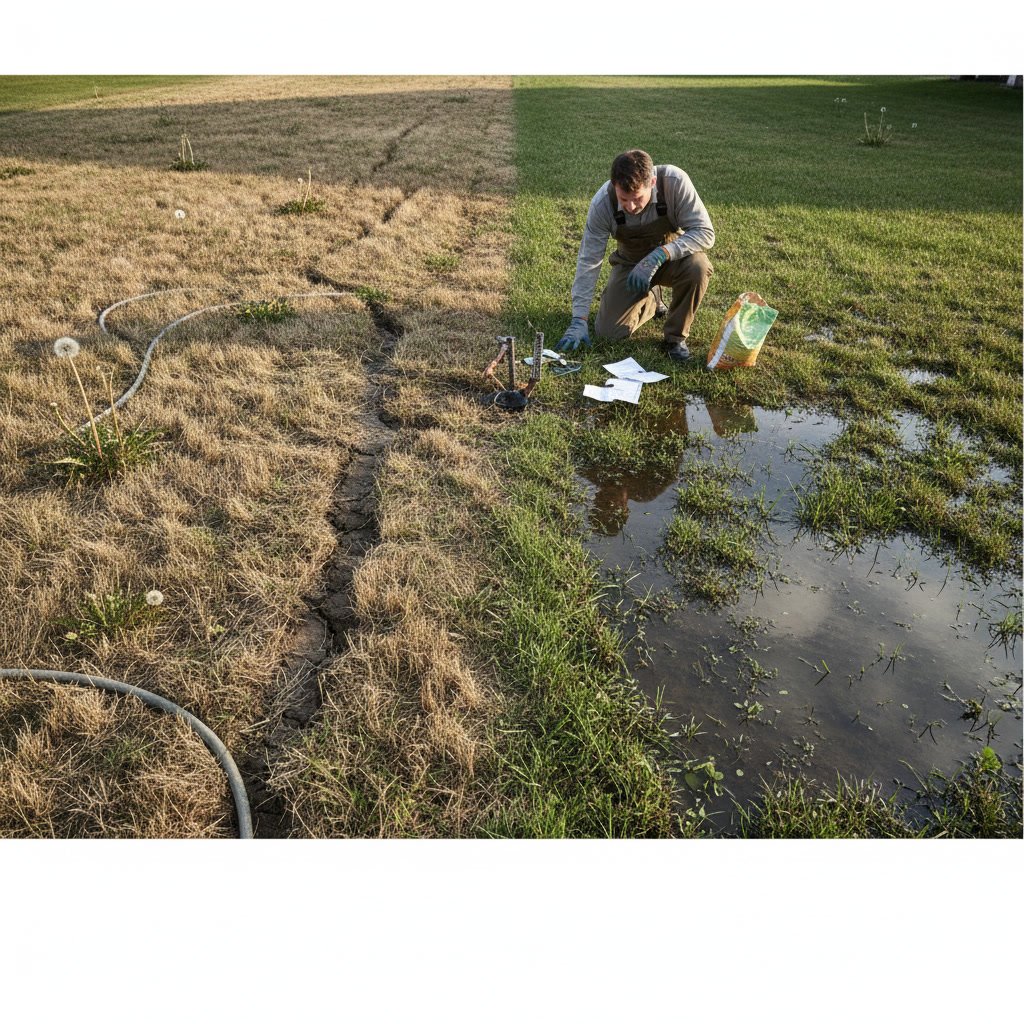
Overwatered grass displays several distinct symptoms that worsen over time. The most obvious sign is standing water or persistent soft, muddy spots that never seem to dry out, even on sunny days. Grass blades may turn yellow or light green as roots suffocate from lack of oxygen in waterlogged soil.
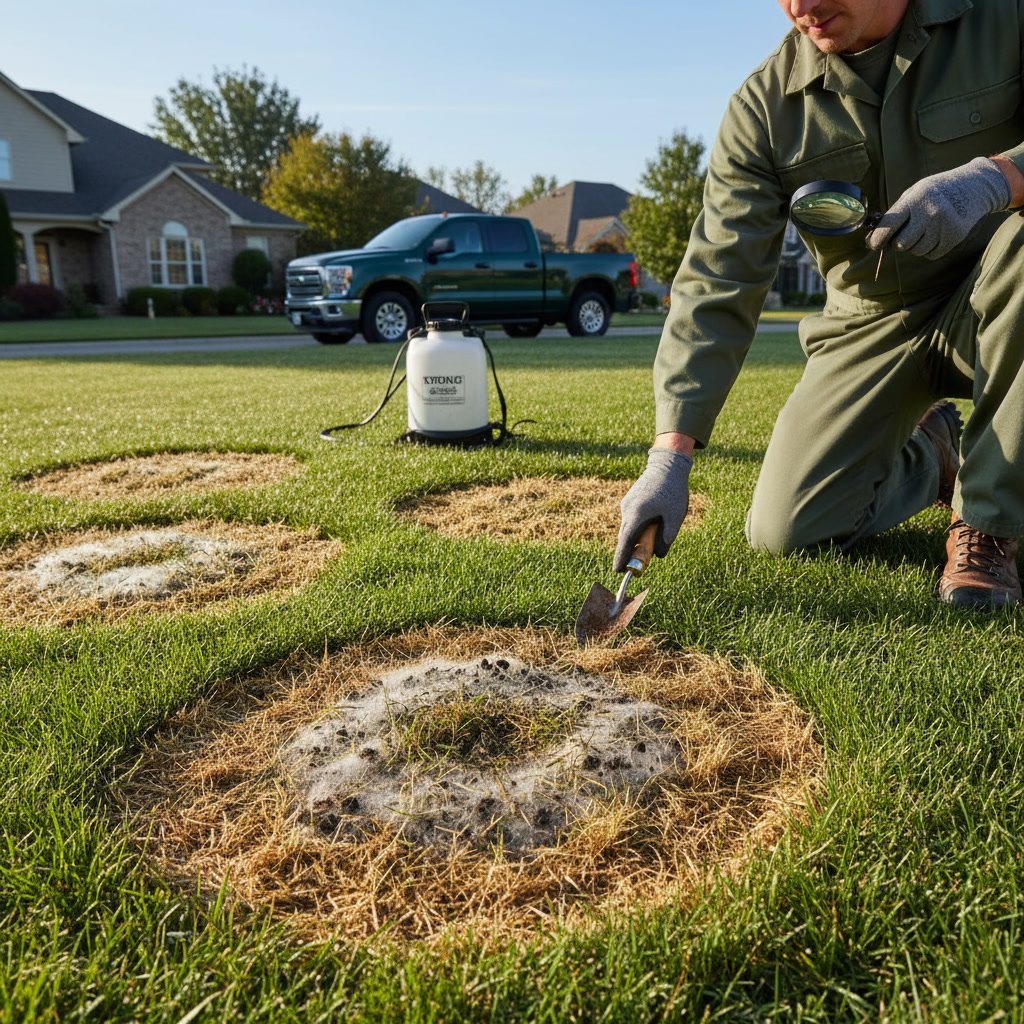
Another telltale indicator is the presence of fungal diseases. Overwatering creates the damp conditions fungi need to thrive. Look for circular patches of discolored grass, slimy or fuzzy growth on blades, or rings of mushrooms sprouting after watering. These problems rarely resolve without reducing moisture levels and improving air circulation.
Moss and algae growth signals chronic moisture issues. These organisms appear as green, slimy films on soil surfaces or thick moss carpets that crowd out grass. They thrive where water sits too long and sunlight struggles to penetrate. Addressing drainage problems becomes essential in these cases.
How to Spot Underwatering Before Permanent Damage Occurs in Owego
Drought-stressed lawns show warning signs before they turn completely brown. The first symptom is a blue-gray tint to the grass, often accompanied by visible footprints or mower tracks that remain long after you walk or drive across the lawn. Healthy, hydrated grass springs back quickly, but dehydrated turf stays compressed.
Soil cracking is another clear indicator. When soil pulls away from sidewalks, driveway edges, or itself, moisture levels have dropped too low. Cracks wider than a quarter-inch suggest severe dehydration that has stressed roots and reduced their ability to absorb water efficiently even when you do irrigate.
Grass blades folding or curling inward conserve moisture during dry periods. If you notice this during the cooler morning hours rather than just during afternoon heat, your lawn needs more water. Brown, crunchy patches that crackle underfoot indicate areas where grass has entered dormancy or died completely.
Soil Tests That Reveal the Truth About Moisture Levels
The screwdriver test provides immediate feedback about water penetration. Push a long screwdriver or metal probe into the soil after watering. It should slide in easily to a depth of six inches in properly hydrated soil. If it stops at two or three inches, water is not reaching the root zone and you need to adjust duration rather than frequency.
Digging a small inspection hole six to eight inches deep lets you see and feel moisture levels directly. Soil at the bottom should feel cool and slightly damp but never soaking wet or bone dry. This hands-on check reveals whether your irrigation schedule matches your lawn’s actual needs.
A simple squeeze test works for determining soil moisture by hand. Grab a handful of soil from three to four inches deep and squeeze it. Properly moist soil holds together in a loose ball but crumbles easily when you poke it. Soil that drips water is oversaturated, while soil that will not form a ball at all is too dry.

Comparing Overwatering and Underwatering Symptoms Side by Side
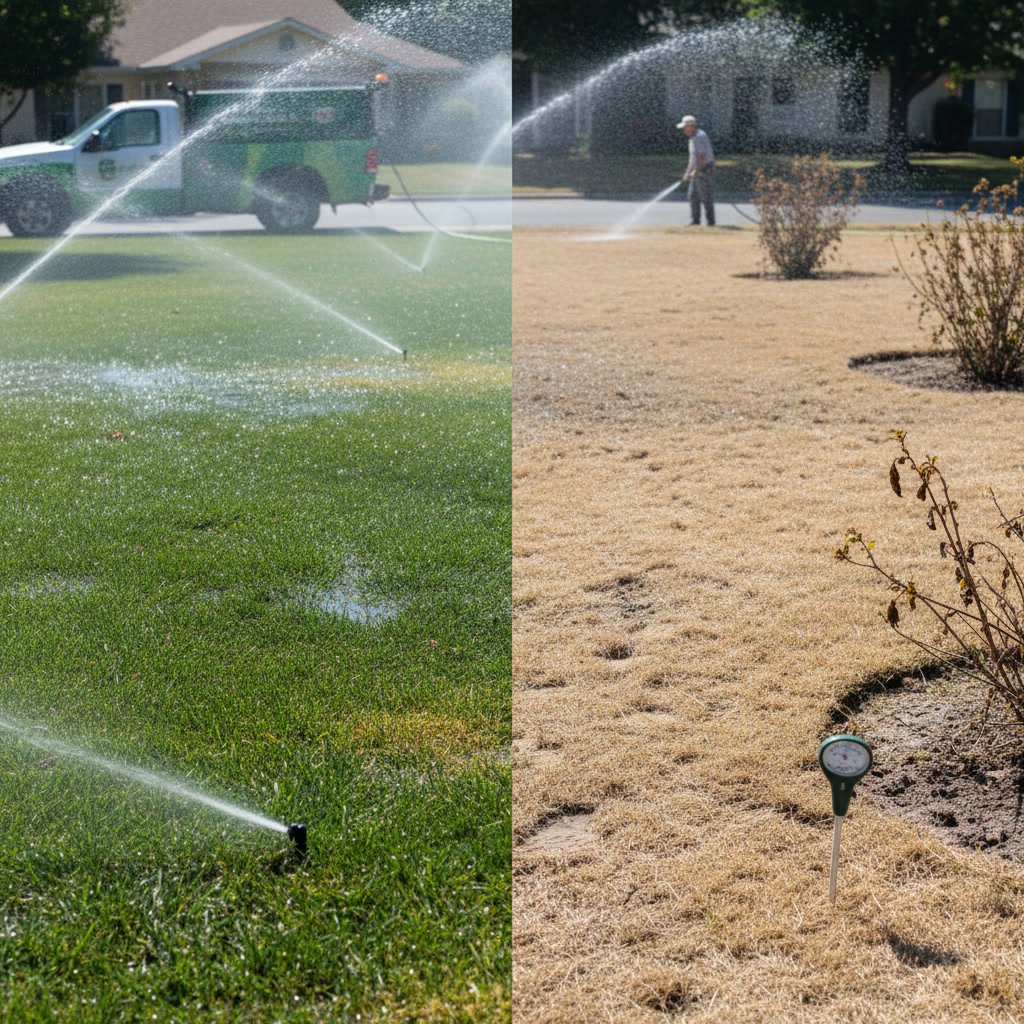
Distinguishing between too much and too little water becomes easier when you compare symptoms directly. Overwatered grass often shows soft, spongy growth with shallow roots that pull up easily. Underwatered grass develops deep but sparse roots with tough, wiry blades that resist tearing.
Color changes differ between the two extremes. Overwatered lawns turn yellow or pale green as nutrients leach away and roots suffocate. Underwatered lawns shift from vibrant green to dull gray-green before finally browning. The transition happens over days with drought stress but can occur within a week during periods of excessive irrigation.
Weed types provide additional diagnostic clues. Overwatered areas attract moisture-loving weeds like sedges, crabgrass, and clover. Underwatered sections see drought-tolerant invaders such as dandelions, spurge, and bindweed taking advantage of stressed turf.
Timing and Frequency Adjustments That Fix Most Issues
Most lawns thrive on deep, infrequent watering rather than shallow, daily sessions. Watering two to three times per week to a depth of six inches encourages roots to grow downward searching for moisture. Daily light watering keeps roots near the surface where they remain vulnerable to heat stress and foot traffic damage.
Early morning watering between 4 a.m. and 9 a.m. gives grass time to dry before nightfall, reducing disease risk. Evening watering leaves blades wet overnight, creating ideal conditions for fungal growth. Midday watering wastes water to evaporation and can scorch wet grass blades in intense sun.
Adjust frequency based on weather, season, and grass type. Cool-season grasses common in the Northeast need more water during hot summers but less in spring and fall. Reduce watering by 30 to 40 percent during rainy weeks and increase during heat waves or windy conditions that accelerate evaporation.
Drainage Solutions for Chronic Wet Spots
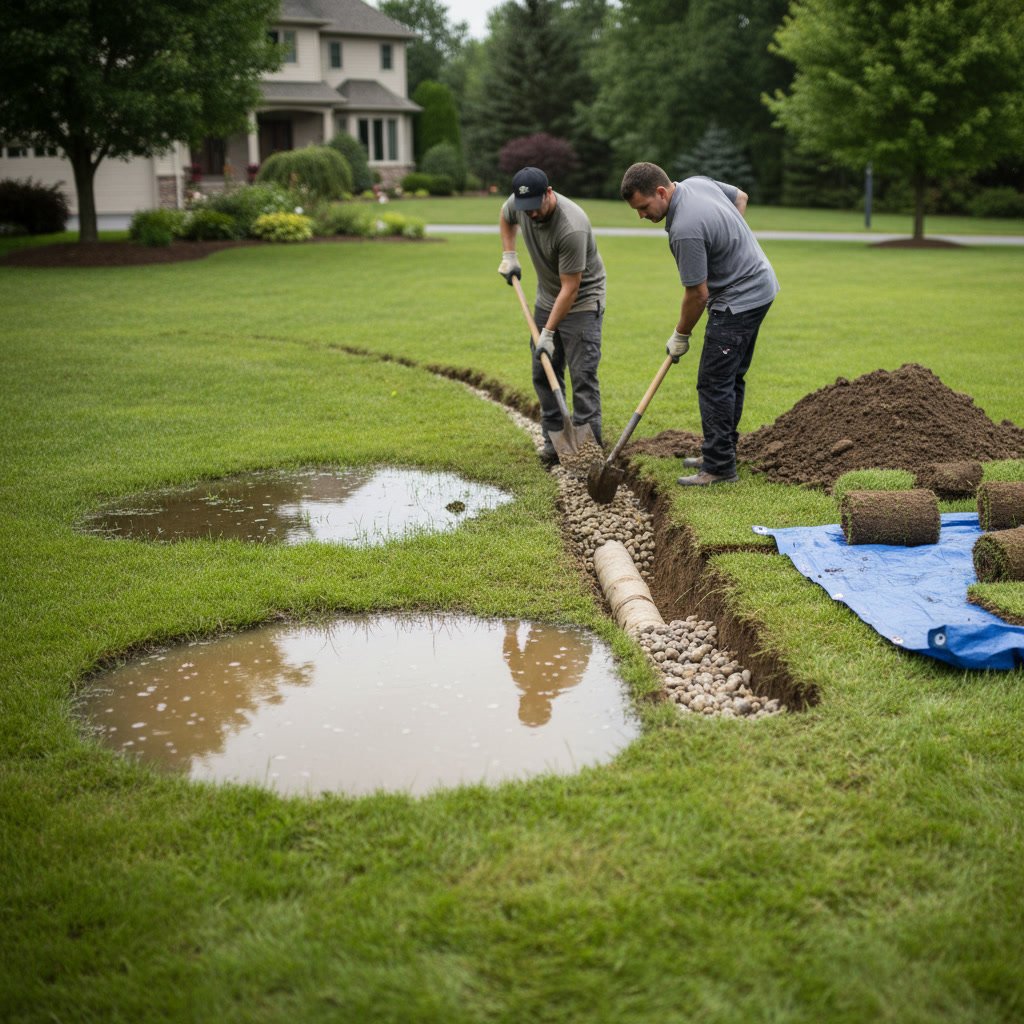
Persistent puddles after every watering or rain indicate drainage problems that watering adjustments alone cannot fix. Low spots collect runoff and need regrading to redirect water flow. Sometimes adding soil to raise the grade by two to three inches resolves the issue, but severe cases require installing drainage systems.
Compacted soil prevents water from percolating downward, forcing it to pool on the surface. Core aeration creates channels for water and air to penetrate, breaking up compacted layers. Aeration works best in spring or fall when grass actively grows and can quickly fill in the small holes left behind.
French drains, catch basins, or dry wells handle extreme drainage challenges. These systems collect excess water and channel it away from problem areas or allow it to slowly absorb into deeper soil layers. Professional installation ensures proper slope and placement for maximum effectiveness.
When Watering Issues Signal Bigger Lawn Health Problems
Sometimes what appears to be a simple watering problem actually reflects underlying disease or pest damage. Disease management becomes necessary when fungal infections spread despite correcting moisture levels. Brown patch, dollar spot, and pythium blight all cause symptoms similar to drought stress but require fungicide treatment rather than more water.
Insect infestations create similar confusion. Grub damage produces irregular brown patches that look like drought stress but do not respond to increased watering. Pulling up a section of affected turf reveals the white, C-shaped larvae feeding on roots. Insect management programs target these pests before populations explode and cause irreversible damage.
Soil pH imbalances interfere with nutrient uptake even when water and fertilizer are adequate. Grass growing in overly acidic or alkaline soil shows stunted growth, yellowing, and patchy appearance. A professional soil test reveals pH problems and guides amendments like lime or sulfur to restore optimal conditions.
Professional Assessment vs. Trial and Error
Diagnosing lawn problems accurately saves money and frustration. What looks like a watering issue might actually stem from soil compaction, poor drainage, disease, or pest damage. TEK 22 Tree Service offers comprehensive lawn care evaluations that identify the root cause rather than just treating symptoms.
Professional assessments include soil testing, drainage analysis, and inspection for diseases and pests. This thorough approach prevents the common mistake of overwatering diseased turf or underwatering compacted soil. The right diagnosis leads to targeted solutions that actually work rather than temporary fixes that waste time and resources.
Understanding what happens during a professional lawn care service helps you make informed decisions about when to call for help versus when to adjust your watering schedule independently. Some problems resolve with simple irrigation changes, while others require specialized equipment and expertise.
Keeping Your Lawn Healthy Through Smart Watering Practices
Recognizing the signs of overwatering and underwatering protects your lawn from preventable damage and saves you from expensive repairs or full renovations. Adjusting your irrigation schedule based on soil tests, visual symptoms, and seasonal changes creates the conditions grass needs to develop deep roots and resist stress. Regular monitoring catches problems early when simple solutions still work.
Whether you are dealing with stubborn wet spots, persistent brown patches, or simply want to optimize your watering routine for healthier turf, TEK 22 Tree Service provides expert lawn care solutions throughout the Southern Tier. Our team handles everything from drainage problems to disease treatment, giving you the healthy, resilient lawn you want without the guesswork. Reach out at +16072375153 to schedule an evaluation and get your lawn back on track.